
Why Garage Floor Coatings Fail in Florida (And What Actually Works)

Updated: Jul 28
If you’ve ever seen a garage floor start to peel, fade, or bubble in Central Florida, you’re not imagining things—and it’s not random. Florida creates a very specific set of conditions that many coating systems are simply not built to handle.

The same floor coating that performs well in cooler, drier climates can begin to break down much faster in places like Lakeland. That doesn’t always mean the product itself is “bad”—it usually means it was never designed for the environment it was installed in.
This guide focuses on what actually matters for homeowners in Central Florida: UV exposure, humidity, moisture in the concrete, and year-round temperature swings. Understanding these factors can help you avoid short-term results and choose a system that performs long-term.
Why Central Florida Is Tough on Floor Coatings
Central Florida sits in a hot, humid climate zone where coatings are constantly exposed to environmental stress. Heat, sunlight, and moisture don’t just affect how a floor looks—they directly impact how well it bonds and how long it lasts.
UV Exposure
Florida consistently experiences high UV levels throughout the year. Even garage floors are affected, especially when doors are open during the day or when sunlight reaches the slab.
Many standard coatings—especially lower-cost epoxy systems—use aromatic chemistry, which is not UV stable. Over time, this can lead to yellowing, fading, or a chalky appearance.
This isn’t just a cosmetic issue. UV exposure gradually breaks down the coating itself, which can affect durability and long-term performance. To learn more about this, click here.
Humidity and Moisture Vapor
One of the most overlooked issues in Florida is moisture coming from within the concrete slab. Concrete naturally holds moisture, and in humid environments like Lakeland, that moisture can move upward over time. If a coating system is not designed to handle this, it can begin to lose adhesion from underneath—leading to bubbling, peeling, or delamination.

This is why proper moisture evaluation and system selection matter. A coating is only as strong as the surface it’s bonded to.
Heat and Installation Conditions
Temperature also plays a major role in how coatings perform during installation.
Traditional epoxy systems require a fairly controlled temperature range to cure properly. In Florida, especially during warmer months, garages can easily exceed those conditions. This can lead to inconsistent curing, uneven finishes, or reduced working time for installers.
In simple terms, Florida leaves less room for error.
Matching the Right System to Florida Conditions
Standard Epoxy: Where It Works (and Where It Doesn’t)
Epoxy is still a widely used material in the coatings industry, and it performs well in certain environments—especially indoors or in spaces without UV exposure.
However, in Florida garages with sunlight and humidity, epoxy alone often has limitations. Without a UV-stable topcoat, it can discolor over time. Without proper moisture considerations, it can lose adhesion.
Epoxy works best when used as part of a larger system—not as a standalone solution for exposed residential floors.
Polyaspartic Coatings: Built for Exposure

Polyaspartic coatings are designed with aliphatic chemistry, which provides strong resistance to UV exposure. This makes them a more suitable option for environments where sunlight is a factor.
They also cure much faster than traditional epoxy, allowing for more flexibility during installation and reducing downtime for homeowners.
In practical terms, this means:
The coating is less likely to yellow over time. Installation can be completed more efficiently. The surface can return to use much sooner
The System Approach: Why Layers Matter
At Tru-Grit Epoxy Flooring, floor coatings are installed as a multi-layer system, not a single product.
Each layer serves a purpose:
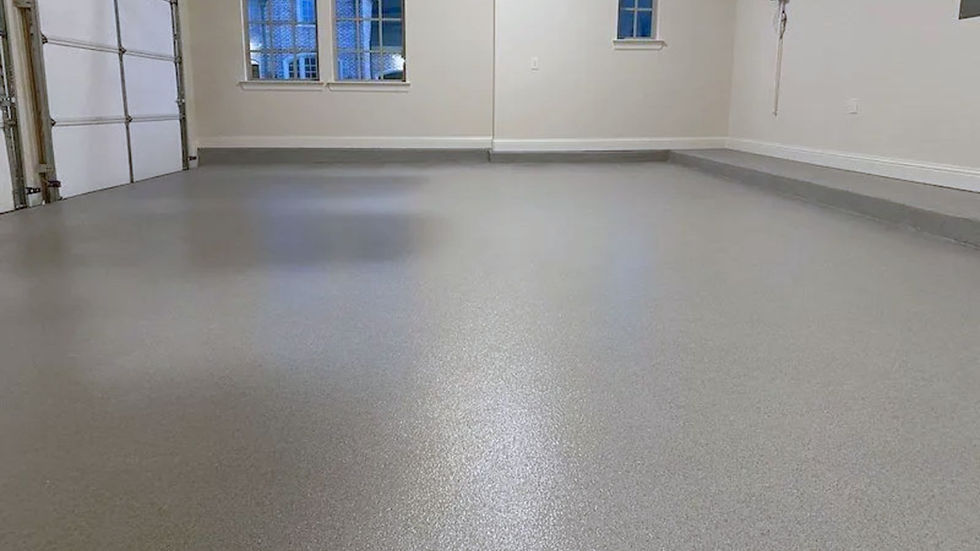
Mechanical surface preparation creates the proper profile for bonding. An epoxy base coat helps anchor the system to the concrete. A decorative flake layer adds texture and visual depth. A NanoX polyaspartic topcoat provides UV stability and surface protection
This combination helps address the main challenges found in Florida environments—moisture, UV exposure, and daily wear.
What to Ask Before Hiring a Floor Coating Company
If you’re comparing options, asking the right questions can help you avoid common issues later.
Do you test or evaluate moisture in the concrete before installation? Is the topcoat UV-stable or prone to yellowing? What type of surface preparation is used—mechanical grinding or acid washing? Is the system designed for Florida’s climate specifically? What happens if there’s an issue after installation?
These questions are not about sales—they’re about understanding how the system will perform once it’s installed.
A Note on “Epoxy Flooring” Searches

When searching for garage floor coatings, it’s common to see many companies using similar language. Not all systems are built the same, and not all installers use the same materials or preparation methods.
Looking beyond pricing and focusing on system design, preparation, and long-term performance can help avoid issues that only show up months or years later.
The Bottom Line for Central Florida Homeowners
Concrete coatings are not one-size-fits-all. What works in one region may not perform the same way in another.
In Florida, factors like UV exposure, humidity, and moisture vapor play a major role in how a floor holds up over time. Choosing a system that accounts for those conditions can make the difference between a floor that lasts and one that needs to be redone.
If you’re exploring options, focusing on long-term performance—not just initial appearance—can help you make a more informed decision for your space.


Comments